


If you’re at least sixteen years old and have ever had access to the internet, the first piece of writing advice you’ve likely stumbled upon is write what you know.
I certainly didn’t take that advice when I started writing.
My first story was about me and my friends being Sailor Moon and the Sailor Scouts in a vague version of Los Angeles.
My second story was me and my friends being in a Gossip Girl/The It Girl-esque world with real-life celebrities we loved at the time (think Dan Rad, Tom Felton, Jeremy Sumpter, and Jesse McCartney).
My most popular fanfic (circa 2011-2014) was another real-person fic featuring Prince Harry. My FMC was a Danish princess. Do you think I knew anything about that world living in rural northeast PA?
Today, I’m writing about two tennis professionals. And while that’s closer to my lived experience—not the professional, tour-level player part—there are elements that I’m still researching and looking into. Namely, my FMC has a chronic illness I don’t have.
But is that stopping me? No! And you shouldn’t stop writing what you don’t know either.

If you haven’t seen me before, I’m Kourtney,
a developmental fiction editor.
Here, at the Wordforge, you’ll find essays
on writing, publishing, and how to
make your story stronger.
What Do the Experts Really Mean by “Write What You Know?”
It simply means write what you’ve experienced.
Most of us take that literally—our lived experiences. Which, yes, that comes into play for sure. But what write what you know is really telling us to do is to tap into our emotional experiences and apply them to the things you actually want to write about.
The inspiration for this post came from one of my Discord writer friends who asked if “‘Write what you know.’ But what if what I know sucks? Then what?”
If you have an idea for a post, don’t hesitate to drop it in a comment or DM me.
Our daily lived experience can feel boring and mundane because we live them every single day.
When I was in Scotland, the woman I dog-sat for and her friends were constantly in awe of my awe at the buildings and architecture. One of them said, “It’s nice seeing the city [Edinburgh] through your eyes because I’m so used to it.”

When This Advice is Helpful.
It’s useful when you’re wanting to use things that you’re comfortable and confident in.
This comes in many forms—the books you read from the time you started reading till now, different jobs and careers you’ve had over your life, places you’ve lived and traveled, relationships you had, friendships, the wins and the losses.
Instead of getting caught up in all-or-nothing thinking—if I didn’t experience XYZ, I can’t write about it—go deeper, consider your emotions.
Everything you’ve done or experienced in your life has emotions attached to it.
I’ve never won a Grand Slam, but I do know the pressure, tension, and anxiety that comes with playing college tennis and can apply and amplify it to my writing.
I don’t know what it’s like to coach a top player through a Grand Slam, but I do know what it’s like to work with top junior players and coach them through matches.
I don’t know what it’s like to watch a kingdom fall to tyranny, but I can pull from the feelings and experiences that I’m going through today watching whatever is going on with the US.
I’ll never know what it’s like to fly like Peter Pan, but I can imagine the feeling of freedom and mobility is similar to when I first got my drivers license.
When This Advice Isn’t Helpful.
“Write what you know” can be thrown in the trash when it freezes you up and stalls either your idea or the freedom to get words on the page.
That being said: It’s very important to learn and educate yourself on what you don’t know before, during, and after writing it.
I say before, during, and after because some people like to blast through their first draft and research when they’re revising. Some like to do it before writing. Some like to do it during.
There’s no one correct way to do this—writing is a craft, not a science.
If you’ve only ever read (and study/analyzed) romance novels, you’ll be very good at the structure, pacing, reader expectations. Writing romance will be easier for you.
If you want to write another genre, you’re going to need to become a student of that genre. Read the books. Study the structure, the tropes, the reader expectations.
Same thing goes for if you’re writing outside of your lived experienced. If you’re a man, go talk to some woman, read some books about what it’s like to be a woman, etc.(Imagine having to explain women can’t lactate on command to a 60-year-old man—I don’t have to because I had to do just that a very long time ago.)
If you’re writing in a different time period, you’re going to need to research.
Picking up on a theme?
Research, reading, watching TV/movies, and asking questions to real human beings about the things you don’t know but want to write about will help you start to “live” in that experience, that time period, etc.

I don’t know anything about living with rheumatoid arthritis (my FMC has it in my tennis romance) but I’ve spoken to people who live with it, read peer-reviewed articles on treatments and different studies, and scoured Reddit threads for lived experiences with onset, symptoms, diagnosis, medication, and other things that help manage their pain.
At 21-years-old, writing my Prince Harry fanfiction, I had settings like London, Copenhagen, and the Faroe Islands. I studied the culture, architecture, food, and customs of those places so I could write about them.
I read biographies and documentaries on the British Royal Family (BRF). I became an avid “royal watcher” via Tumblr back in its hey-day. Back then I could give you the entire family history and line of succession for the BRF and the Danish Royal Family.
I scoured the internet for the layouts of the different royal residences (they’re not public information for obvious reasons), but I did look at pictures of the room dressings and furniture to get a sense of how these people lived who were so far removed from how I lived.
Write What You Know & Research What You Don’t
You don’t have to stay in your wheelhouse or your family home in northeast PA or your tiny college dorm room.
The writing advice of “write what you know” exists to encourage you to draw on the experiences you already have and apply them to your story and your characters in an authentic way.
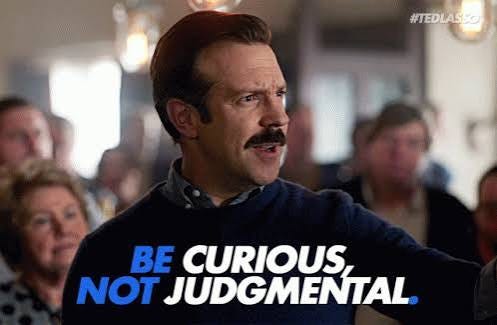
The experiences you don’t have can be researched, studied, and discussed with people who have lived what you’re wanting to include in your book. Do your due diligence and approach everything with curiosity, not judgement.
If you enjoyed this, feel free to like, comment, or share it so more writers can find this corner of the internet!
Bella ciao, ciao, ciao,

i love that you complement your lived experience (emotions) with detailed research! excellent post!
I loved this!! When I first began getting slammed with the "Write what you know" my creative writing professors actually meant only writing what I had experienced and staying in the real world. 😅 they thought sci-fi, fantasy and romance genres were trash and not real writing. (Their words,not mine) they tore my self-esteem and self-confidence in my writing to shreds because they called it trash and threw it on the floor during workshop (in class in front of everyone) I did a post about it 😅 living nightmare and scarred me. But if they had thought that advice like this, I could have learned a lot about using my own experiences to write better, instead of destroying me. 🙃 great post!